
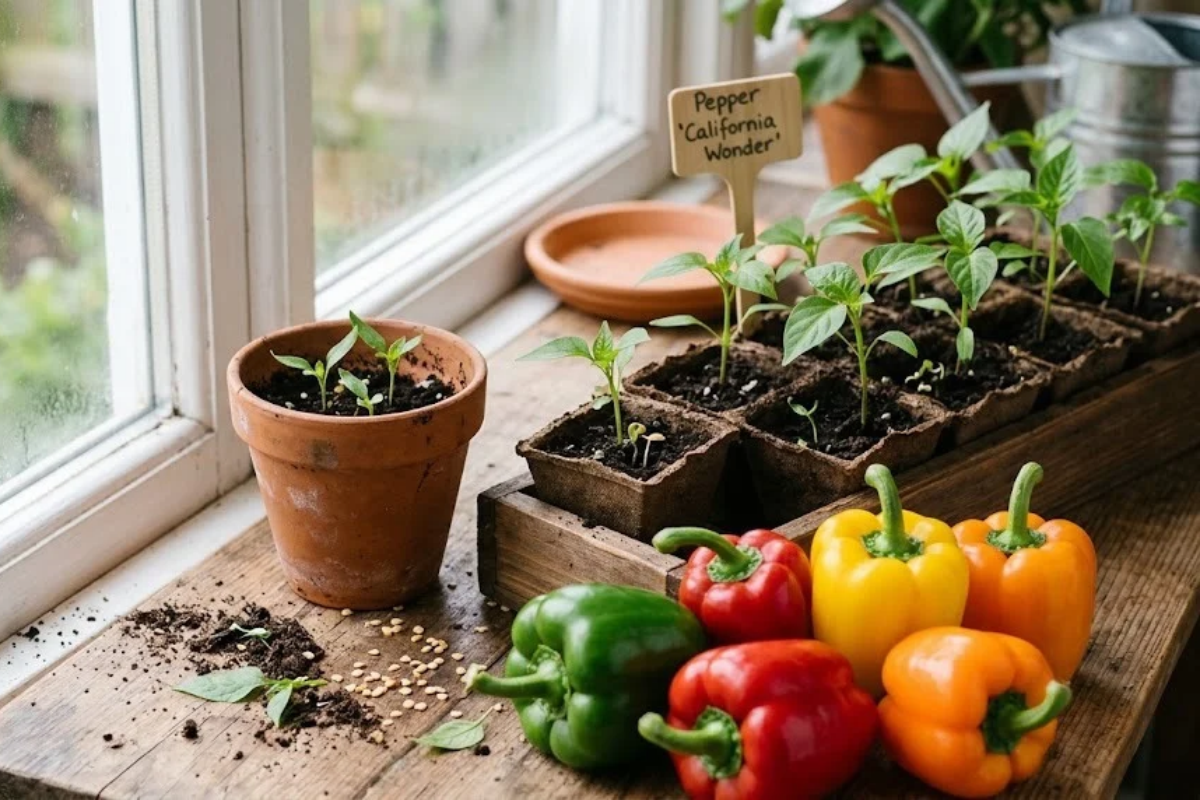
Growing bell peppers from seeds is a rewarding way to enjoy fresh, colorful vegetables straight from your garden. Whether you have a backyard vegetable patch, a raised bed, or a few large containers on your patio, bell pepper plants can be a wonderful addition to your home garden.
advertisement
Bell peppers come in different colors, including green, red, yellow, and orange, depending on the variety and stage of maturity. With the right growing conditions, consistent care, and a little patience, you can grow healthy pepper plants and enjoy their delicious harvest.
In this beginner-friendly guide, you will learn how to grow bell peppers from seeds, when to start planting, how to care for seedlings, and which supplies can help you get started.
Table of Contents
What You Need to Grow Bell Peppers from Seeds
Before planting your seeds, gather a few basic gardening supplies. Having everything ready will make the process easier and help your seedlings develop strong roots.
Here is what you need:
advertisement
- Bell pepper seeds: Choose a variety that suits your growing space and preferences.
- Seed starting trays or small pots: These provide a suitable place for seeds to germinate.
- Seed starting mix: A light, well-draining mix helps young roots develop.
- Watering can or spray bottle: Use it to keep the growing medium evenly moist.
- Plant labels: Label your varieties so you can identify them as they grow.
- A sunny window or grow light: Pepper seedlings need plenty of light.
- Larger pots or garden space: You will need somewhere to transplant your seedlings as they mature.
You do not need an expensive setup to get started. A simple seed tray, quality growing mix, and suitable light can be enough for a small home gardening project.
When Should You Start Bell Pepper Seeds?
Timing is important when growing bell peppers because these warm-season plants need a relatively long growing period.
In most parts of the United States, gardeners start bell pepper seeds indoors approximately 8 to 10 weeks before the expected last spring frost. This gives the seedlings time to develop before they are moved outdoors.
However, your ideal planting date depends on your local climate, frost dates, and the length of your growing season.
Starting Seeds Indoors
Starting seeds indoors gives you more control over temperature, moisture, and light. It is particularly helpful in regions where spring arrives slowly or the outdoor growing season is short.
For best results, maintain warm conditions during germination. Bell pepper seeds generally germinate best when the growing medium is around 80–85°F (27–29°C).
Once the seedlings emerge, provide plenty of light and avoid allowing the growing medium to become waterlogged.
Planting Bell Peppers Outdoors
Do not rush to move your seedlings outdoors.
Wait until the danger of frost has passed and nighttime temperatures are consistently warm. Bell peppers grow best in warm soil, and cold conditions can slow their growth.
Before transplanting, check your local frost dates and the growing instructions for your chosen variety.
advertisement
How to Plant Bell Pepper Seeds Step by Step
Growing bell peppers from seeds is straightforward when you follow a few basic steps.
Step 1: Choose Your Bell Pepper Seeds
Start by selecting seeds from a variety that matches your gardening goals.
Some gardeners prefer classic green-to-red bell peppers, while others enjoy growing yellow, orange, or purple varieties. You can choose a single variety or experiment with several types to discover which ones perform best in your garden.
If you want to grow different colors, look for a seed collection that includes multiple varieties. Read the packet descriptions carefully to understand each plant’s characteristics and growing requirements.
For beginners, it is helpful to choose varieties suited to your local climate and available growing space.
Step 2: Prepare Your Seed Starting Trays
Fill clean seed starting trays or small pots with a suitable seed starting mix.
Moisten the mix before planting. It should feel damp but not saturated with water.
Avoid using heavy garden soil in small indoor containers because it may drain poorly and make it harder for delicate seedlings to establish themselves.
If you are reusing containers, clean them properly before planting to reduce the risk of introducing plant diseases.
Step 3: Plant the Seeds
Follow the planting depth specified on your seed packet. Many bell pepper seeds are planted approximately 1/4 inch deep.
Place one or two seeds in each cell or small pot, then gently cover them with the growing medium.
Label each variety so you can keep track of what you planted.
Water gently to settle the mix around the seeds without washing them away.
Step 4: Keep the Growing Medium Warm and Moist
Warmth is one of the most important factors in successful bell pepper seed germination.
Place your trays in a warm location and maintain a consistent temperature. A seedling heat mat can help if your growing area is too cool.
Check the trays regularly. The growing medium should remain evenly moist, but excess water should be able to drain away.
advertisement
Bell pepper seeds may take a week or two to germinate under favorable conditions, although some seeds take longer. Cool temperatures, old seeds, and inconsistent moisture can delay germination.
Be patient and continue checking the trays rather than assuming the seeds have failed after just a few days.
Step 5: Provide Plenty of Light
Once the seedlings emerge, move them into a bright location.
A sunny window may work, but seedlings grown indoors often benefit from a grow light because window light can be insufficient, particularly during early spring.
Provide strong, consistent light according to the instructions for your grow light. If seedlings become tall, thin, and weak, they may not be receiving enough light.
Good lighting encourages compact growth and helps seedlings develop sturdy stems.
Step 6: Water Your Seedlings Carefully
Young pepper plants need consistent moisture, but their roots also need oxygen.
Check the growing medium regularly and water when necessary. Avoid letting the containers sit in standing water.
Water gently around the base of the plants, taking care not to damage delicate stems.
The right watering frequency depends on the container size, temperature, airflow, and growing medium. Instead of following a rigid daily schedule, check the actual moisture level of your seedlings.
Step 7: Thin and Maintain the Seedlings
If several seedlings emerge in the same cell, keep the strongest one if the plants are overcrowded.
Cut the unwanted seedling at the soil surface rather than pulling it out, which could disturb the roots of the remaining plant.
Continue providing suitable light, warmth, and moisture as the seedlings grow.
If the plants outgrow their original containers before outdoor planting conditions are suitable, transplant them carefully into slightly larger pots.
Step 8: Harden Off Your Seedlings
Before moving indoor-grown pepper plants into the garden, help them adjust gradually to outdoor conditions. This process is called hardening off.
Over approximately 7 to 10 days, introduce the seedlings to outdoor conditions for gradually increasing periods. Begin in a sheltered, shaded location and slowly increase their exposure to sunlight and gentle outdoor conditions.
Avoid exposing young plants to frost, strong winds, or extreme temperatures during this process.
Hardening off reduces transplant stress and helps prepare seedlings for life outdoors.
advertisement
Step 9: Transplant Your Pepper Plants
Once the weather is warm and the seedlings have been hardened off, transplant them into their final growing location.
Choose a sunny spot with fertile, well-draining soil.
Space plants according to the seed packet instructions, since mature plant size varies between varieties.
Water thoroughly after transplanting to help settle the soil around the roots.
If you are growing peppers in containers, choose pots with drainage holes and enough room for the mature plants to develop.
How to Care for Bell Pepper Plants
After transplanting, your bell pepper plants need the right combination of sunlight, water, nutrients, and warmth.
Give Them Enough Sunlight
Bell peppers generally perform best with at least 6 to 8 hours of direct sunlight daily.
Choose a location that receives plenty of sun throughout the growing season.
In particularly hot climates, some afternoon shade may help reduce heat stress, but too little sunlight can limit plant growth and fruit production.
Water Consistently
Pepper plants need regular moisture, especially during flowering and fruit development.
Water deeply enough to moisten the root zone, allowing excess water to drain away. Mulching around outdoor plants can help retain soil moisture and reduce weeds.
Avoid repeated cycles of severe drying followed by excessive watering. Fluctuating moisture can contribute to problems such as blossom-end rot, which is associated with inadequate calcium availability in developing fruit and inconsistent water supply.
Feed Your Plants Appropriately
Bell peppers benefit from fertile soil and balanced nutrition.
Before planting, consider incorporating compost or using a suitable vegetable garden fertilizer according to its label.
Avoid excessive nitrogen fertilization. Too much nitrogen can encourage leafy growth at the expense of flowering and fruit production.
Follow the fertilizer instructions and adjust your approach according to plant growth and soil conditions.
Support Heavy Plants When Necessary
As peppers develop, branches can become heavy with fruit.
Use small stakes or suitable plant supports if the plants begin leaning or the branches need extra support.
Handle the stems gently, especially when the plants are producing mature peppers.
How Long Does It Take to Grow Bell Peppers from Seeds?
The time required depends on the variety, temperature, growing conditions, and whether you start indoors or outdoors.
Many bell pepper varieties take approximately 60 to 90 days from transplanting to produce mature fruit, although some varieties take longer.
Germination can take a week or two under favorable conditions, and young seedlings need additional time to develop before transplanting.
Remember that the number of days listed on a seed packet often refers to the period after transplanting, not the total time from planting the seed.
For this reason, starting seeds indoors is particularly helpful in regions with shorter summers.
advertisement
When Are Bell Peppers Ready to Harvest?
You can often harvest bell peppers when they have reached a suitable size and are firm and glossy.
Green bell peppers are commonly harvested before they reach their fully mature color. Depending on the variety, allowing the fruit to remain on the plant longer may result in red, yellow, orange, or another mature color.
Colored peppers often have a sweeter flavor, but leaving fruit on the plant longer also requires additional growing time.
Use clean garden scissors or pruning shears to cut peppers from the plant rather than pulling forcefully on the fruit, which could damage the branches.
Harvesting regularly can encourage continued production when plants are otherwise healthy and growing under favorable conditions.
Recommended Bell Pepper Seeds for Your Garden
If you are planning to grow several types of sweet peppers, choosing the right seeds is an important first step.
One option to consider is the Sow Right Seeds Sweet Bell Pepper Seed Collection.
This product is worth exploring if you want to compare sweet bell pepper varieties for your home vegetable garden. Before purchasing, check the current Amazon listing for the varieties included, packet quantities, growing instructions, and customer feedback.
Why Consider a Bell Pepper Seed Collection?
A seed collection can be useful for gardeners who want to experiment with different pepper varieties rather than growing only one type.
Depending on the varieties included, you may be able to compare fruit colors, flavors, maturity times, and plant performance.
advertisement
Growing more than one variety can also help you discover which plants are best suited to your garden and cooking preferences.
However, check the actual product details before deciding whether the collection meets your needs.
Ready to explore the seeds?
Check the Sow Right Seeds Sweet Bell Pepper Seed Collection on Amazon →
Disclosure: As an Amazon Associate I earn from qualifying purchases.
Common Mistakes to Avoid When Growing Bell Peppers
Even though bell peppers are manageable for beginners, a few common mistakes can slow their growth.
1. Starting Seeds in Cold Conditions
Bell pepper seeds prefer warm germination conditions. Cold growing medium can delay germination and make the process less reliable.
Use a warm location and monitor the temperature if necessary.
2. Overwatering Seedlings
Excessive moisture and poor drainage can encourage root problems and seedling diseases.
Use containers with drainage holes and allow excess water to escape.
3. Providing Insufficient Light
Seedlings grown in dim conditions may become tall and weak.
Provide strong, consistent light after germination and adjust the light setup as the plants grow.
4. Transplanting Too Early
Cold soil and low nighttime temperatures can stress pepper plants.
Wait until local conditions are suitable and harden off seedlings before transplanting.
5. Using Too Much Fertilizer
Excessive fertilizer, particularly nitrogen, may encourage excessive leaf growth rather than balanced plant development.
Follow product instructions and avoid applying more fertilizer than the plants need.
6. Expecting Immediate Harvests
Bell peppers need time to grow, flower, and develop fruit.
Choose varieties appropriate for your growing season and give the plants consistent care throughout their development.
Frequently Asked Questions
Can beginners grow bell peppers from seeds?
Yes. Beginners can grow bell peppers successfully by providing warm germination conditions, adequate light, consistent moisture, and suitable outdoor growing conditions.
How deep should bell pepper seeds be planted?
Many varieties are planted approximately 1/4 inch deep, but you should always follow the instructions on your specific seed packet.
Do bell pepper seeds need light to germinate?
Bell pepper seeds generally germinate best when planted in a suitable growing medium and kept warm and moist. Once seedlings emerge, they need plenty of light for healthy growth.
Can I grow bell peppers in pots?
Yes. Bell peppers can grow in containers if the pots are sufficiently large, have drainage holes, and receive adequate sunlight and water. Choose a container size appropriate for your variety.
Why are my bell pepper seeds not germinating?
Common causes include cool temperatures, inconsistent moisture, planting too deeply, and poor seed viability. Check your growing conditions and allow sufficient time for germination.
How many bell peppers can one plant produce?
Production varies according to the variety, growing conditions, plant health, and length of the growing season. Providing adequate sunlight, water, nutrients, and space can help support better yields.
Should I grow green or colored bell peppers?
That depends on your preference. Green peppers are generally harvested earlier, while many varieties develop red, yellow, or orange colors as they mature. Check the variety description to understand its expected mature color.
advertisement
Final Thoughts
Growing bell peppers from seeds is a rewarding way to begin or expand your vegetable garden. With warm germination conditions, enough sunlight, consistent watering, and suitable growing space, you can raise healthy plants and enjoy fresh peppers at home.
Start with a variety that suits your climate, follow the instructions on the seed packet, and be patient as your seedlings develop.
If you are looking for different sweet pepper varieties to grow, explore the Sow Right Seeds Sweet Bell Pepper Seed Collection and check whether the included varieties match your gardening goals.
Happy gardening!
